
Tree Pruning by a Certified Arborist in Oakland County
Updated September 7, 2026 · Written by Rob Burgund, ISA Certified Arborist MI-4857A
- ISA Certified Arborist MI-4857A
- Working in Oakland County since 2013
- Licensed and insured
- 5.0 stars from 15 Google reviews

Written by Rob Burgund
ISA Certified Arborist · MI-4857A
Rob quotes every pruning job in person and is on site when the work gets done. He has been doing tree work in Oakland County since 2013. More about Rob and Tree Pros, or verify the certification in ISA’s public directory.
Here is what you are actually choosing between, what pruning can and cannot fix, and why we will turn down a job that would hurt the tree.
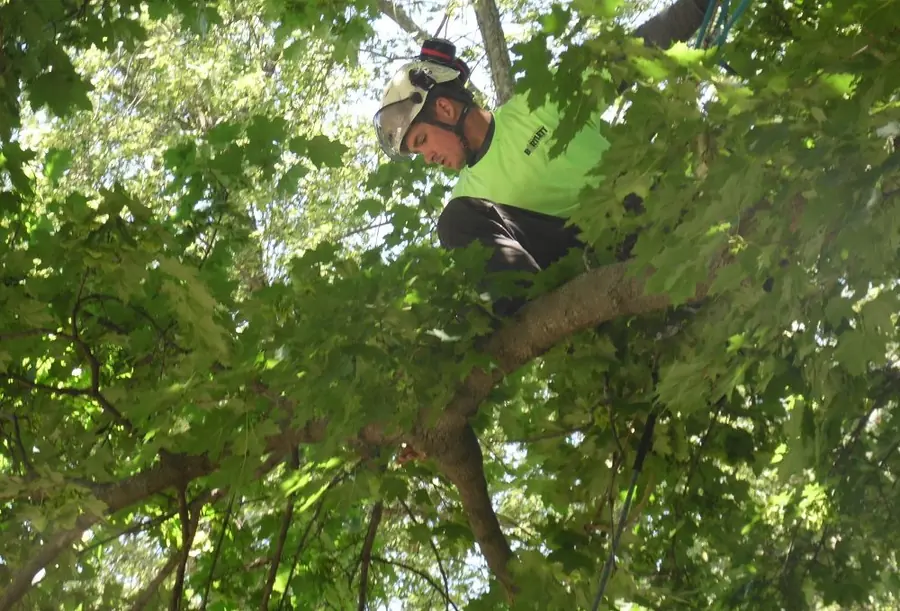
What pruning fixes, and what it does not
Pruning fixes deadwood over the driveway, a limb rubbing the roof, a canopy so dense it acts as a sail in a windstorm, and a tree that has outgrown its spot. Done on a schedule, it also fixes tomorrow’s problems: a young tree pruned for structure never grows the weak fork that splits at forty.
Pruning does not fix a rotten base, a root plate that has started to lift, or a red oak with oak wilt. Cutting branches off a tree that is failing from the ground up makes it lighter, not safer, and it spends your money on the wrong end of the tree. When we see those signs we say so, and we point you to a risk assessment instead.
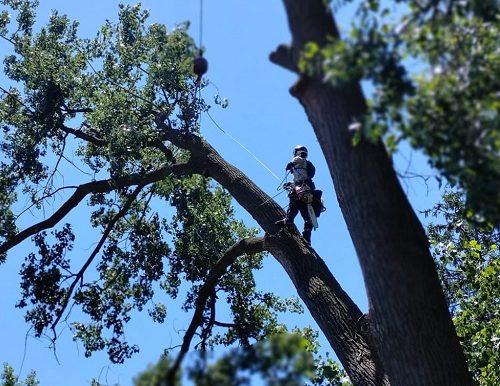
The four kinds of pruning
| Type | What it does | When it is the right call |
|---|---|---|
| Deadwood cleaning | Removes dead, dying, broken and rubbing branches | The default maintenance prune. Safe in nearly any season. |
| Thinning | Selectively removes live branches to open a dense canopy | Better light and airflow, and less sail in a windstorm. Easy to overdo. Done well, you should barely notice it was done. |
| Crown raising | Removes the lowest limbs | Clearance over a driveway, a sidewalk or a roofline. |
| Crown reduction | Brings height and spread down by cutting back to strong side branches | The correct way to shrink a tree that has outgrown its spot, and the honest alternative to topping. |
Why we will not top your tree
Topping means cutting a tree’s main limbs back to stubs to bring its height down, and it is still being sold all over Oakland County. It wrecks the tree.
It strips out the canopy the tree feeds itself with, and leaves wounds too large to ever close over, which are open doors for decay. It also triggers a panic flush of watersprouts that are anchored only in the outermost wood of the stub. A topped tree is usually more dangerous within a few years than the tree you were worried about, and it never gets its natural shape back.
You do not have to take our word for it. ANSI A300 Part 1, the industry pruning standard we work to, treats cutting limbs back to stubs as an unacceptable practice. When a tree really is too big for its spot, the answer is crown reduction. Each limb is cut back to a healthy side branch, which brings the size down while the tree keeps its foliage and a form that holds together in wind.
Fresh pruning wounds attract the sap beetles that carry oak wilt, and an infected red oak can be dead within a matter of weeks. We schedule every oak job for winter, when the beetles are inactive. Elms carry a similar warm-season caution because of Dutch elm disease. If a company offers to prune your oak in May, that alone tells you what they know. Our oak wilt guide has the full picture, and it matters most in oak-heavy places like Bloomfield Hills and Rochester Hills.
When to prune what
Timing depends on the species, and getting it wrong almost always costs more than simply waiting would have.
| Species | Best time | Why |
|---|---|---|
| Maple (sugar, red, Norway) | Late summer or winter | They take pruning well once midsummer growth has slowed. |
| Fruit trees (apple, pear, cherry) | Late summer | Thinning supports fruit development and takes weight off branches carrying a heavy crop. |
| Pine and spruce | Late summer, lightly | Enough to hold their shape and take off damaged limbs. |
| Oak | Winter only | Cuts between April 15 and July 15 attract the beetles that spread oak wilt. |
| Elm | Winter | Dutch elm disease. Prune when the beetles that carry it are inactive. |
| Birch | After leaf drop | Summer cuts bleed heavily. |
| Flowering dogwood and many ornamentals | After flowering, or late dormancy | They set next year’s buds over the summer. |
Storm damage and hazardous limbs are the exception to all of this, because those come off whenever they happen. On an oak, the wound then gets sealed on the spot. For a tree on your house right now, go to our storm and emergency page.
What a certified arborist assessment includes
A tree risk assessment is a written opinion on whether a tree is likely to fail, what it would hit, and what to do about it. The fee is $399, and it is usually credited toward any work you go ahead with. Rob does the assessment himself, and it covers:
- The trunk and the root flare, where the trunk widens out into the roots at ground level, looking for decay, cracks, cavities, fungal growth and girdling roots (roots that circle the trunk and choke it).
- The main unions, especially twin trunks meeting in a tight V, where bark is trapped inside the joint.
- The canopy from inside the tree where it matters, because most structural defects cannot be seen from the ground.
- The targets: what the tree or a failing limb would land on, and how often people are under it.
- Soil and drainage, which matter in Michigan’s wet springs and after a summer of heavy rain.
- A written report with photos, a plain-English verdict, and options ranked from cheapest to most drastic.
That report is useful for your insurer, your neighbor, or simply your own decision. It also turns “nobody could have known” into documented care, which matters under Michigan’s tree liability rules.
What ISA certification actually means →
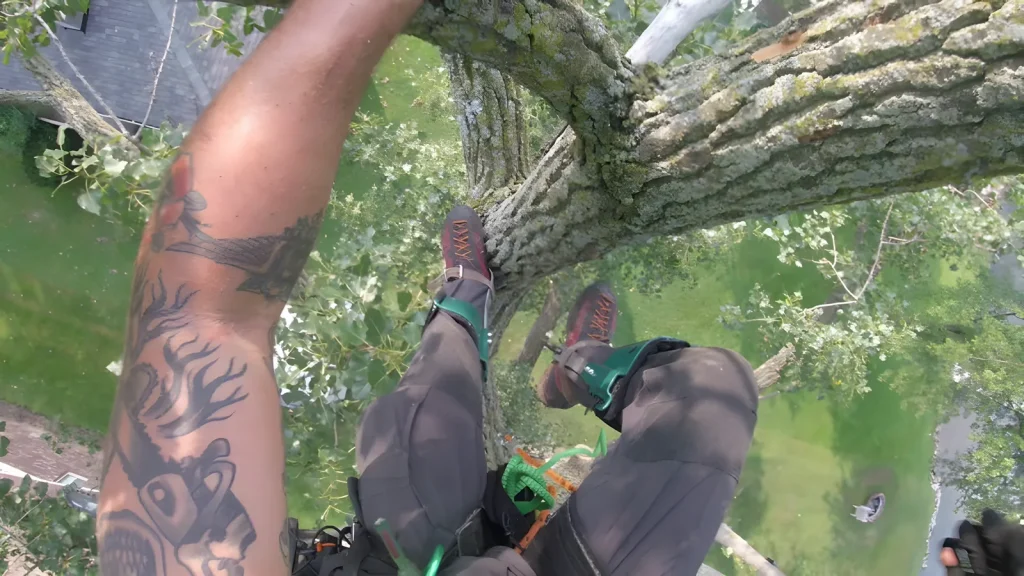
Work that keeps a struggling tree standing
- Root flare excavation, $250 to $600. Soil and mulch piled against a trunk, the classic mulch volcano, slowly girdles a tree over years. Digging that flare back out has turned around trees that looked finished.
- Girdling root correction. A root circling the trunk will eventually strangle it. Caught early, it is cut and the tree recovers.
- Cabling and bracing, typically around $400. A weak fork or a split union can often be supported for a fraction of what removal costs, buying a mature tree decades of safe life.
- Tree risk assessment, $399. The written arborist opinion described above, usually credited toward the work.
What pruning costs here
| Job | Typical cost |
|---|---|
| Pruning a mature shade tree, to ANSI A300 | $400 to $900 |
| Pruning a small ornamental | $200 to $450 |
| Tree risk assessment, written | $399, usually credited toward work |
| Root flare excavation | $250 to $600 |
Every estimate happens on site and in writing. Access, the size of the tree, and what is underneath it move the number, the same way they do for removals. The Oakland County cost guide explains those factors in detail.
Where the saw lands is everything
This is where a certified arborist and a crew with a saw part ways, and it takes years to show, because the mistakes are invisible at first.
A cut made into the branch collar, the swollen ring where a branch meets the trunk, removes the very tissue the tree needs to seal the wound, while a stub left too long simply dies back into the trunk. Neither mistake shows the week the crew packs up and leaves.
Give it five years and both are obvious, one as a column of rot running down the trunk and the other as a dead spike shedding its bark. Good pruning is cheap insurance. Bad pruning is slow damage that you already paid someone to cause.
What customers say about our pruning work
5.0 stars from 15 Google reviews as of September 2026. Every review below is copied word for word from our Google listing, where you can read all of them.
- “With most things in life you get what your willing to pay for . Rob was the real deal certified arborist top notch. the quality difference we saw from our project last year (a disastor) to tree pros was night and day . It's true was they say you can't afford the cheapest guy. Just call Rob if you need it done right the first time”
Ryan H. · May 2026 · Google review - “Rob and his crew did an excellent job. They were polite, professional, and took the time to listen to what I wanted. I appreciated that Rob shared his knowledge and helped me make the right decisions about my trees without ever making me feel pressured.…”
Claire B. · July 2026 · Google review - “We had several trees trimmed on our property. Everything went well from start to finish. Would not hesitate to hire Tree Pros in the future.”
Brian D. · June 2026 · Google review
Pruning questions we hear most
Why not just top the tree to make it shorter?
Because topping makes the tree weaker and more dangerous, not safer. Cutting main limbs back to stubs removes the leaves the tree feeds itself with, leaves wounds too large to close, and forces a flush of watersprouts that are anchored only in the outer wood of the stub. Within a few years those sprouts are heavy, poorly attached, and growing over the same roof you were worried about, now with decay running down the stubs. ANSI A300, the pruning standard, treats topping as an unacceptable practice. Crown reduction is the alternative: each limb is cut back to a healthy side branch that can take over as the new tip, so the tree gets smaller but keeps its natural form and its strength. It costs about the same and it does not have to be undone later.
When is the best time to prune trees in Michigan?
For most species, late winter, when the tree is dormant, the structure is easy to read without leaves, and disease-carrying insects are inactive. Oaks must wait for winter: no cuts between April 15 and July 15, because fresh wounds attract the beetles that spread oak wilt. Elms follow the same logic for Dutch elm disease. Maples do well in late summer or winter, fruit trees in late summer, birch after leaf drop, and spring-flowering ornamentals right after they bloom. Deadwood can come off almost any time, and storm-damaged or hazardous limbs come off whenever they happen, with the wound sealed on the spot if the tree is an oak. Winter is also the cheapest season to book, because demand drops after the fall rush.
How much does it cost to have a tree trimmed in Oakland County?
A mature shade tree typically runs $400 to $900 for a full prune to the ANSI A300 standard, and a small ornamental runs $200 to $450. What moves the number is size, access for the truck and chipper, and what sits under the tree. A maple over an open lawn is quick. The same maple over a roof, a pool, or a neighbor’s fence has to be roped and lowered piece by piece. Deadwood-only work costs less than a full thinning or reduction. If you are pricing several companies, make sure each estimate names the type of pruning and states that the cleanup is included, because a low number for a lighter job is not a bargain.
How often should a mature tree be pruned?
Every few years for most mature shade trees, more often for young trees being trained for structure and for anything growing over a roof or a driveway. Species and growth rate decide it, and we will give you a realistic interval at the assessment rather than a sales schedule.
Can pruning save a tree that is declining?
Sometimes, when the cause is above ground: deadwood, a broken limb, a canopy overloaded on one side. When the cause is below ground, a buried root flare or girdling roots, the fix is excavation, not pruning. When the base is rotten or the root plate is moving, pruning does not make the tree safe. We tell you which case you have before quoting anything.
What happens to the branches and brush?
Brush goes through the chipper the same day. We haul it away unless you would rather keep it for firewood or mulch. Tell us which before we start.
What about power lines near the tree?
If a limb is near a power line, we do not touch it until the utility has made the line safe. Call your utility company first, then us, and we will coordinate the rest.
Why topping does more harm than good →Oak wilt and the pruning window →Signs a tree is dying or dangerous →When a risk assessment makes sense →Storm damage and emergencies →All our services →Tree service across Oakland County →All tree care guides →
Talk to a certified arborist about your trees
Free on-site estimates across Oakland County, and no pressure to remove a tree that does not need it.